Home › Services
Septic Tank Pumping in Boise, Done Before Solids Reach Your Drain Field
A septic tank is a settling chamber, not a disposal unit. Everything heavier than water sinks and stays there until a vacuum truck takes it out, and the lighter grease floats on top until the same truck removes it. Pumping on a sensible schedule is the cheapest protection a rural or edge-of-town property in the Treasure Valley has for the far more expensive part of the system buried out in the yard. This page explains what happens inside the tank, what decides how often yours needs attention, how lids get found and exposed, what a careful pumper should look at while the tank sits open, and what to keep on file afterward. When you are ready, send the address and a few photos from the contact page.
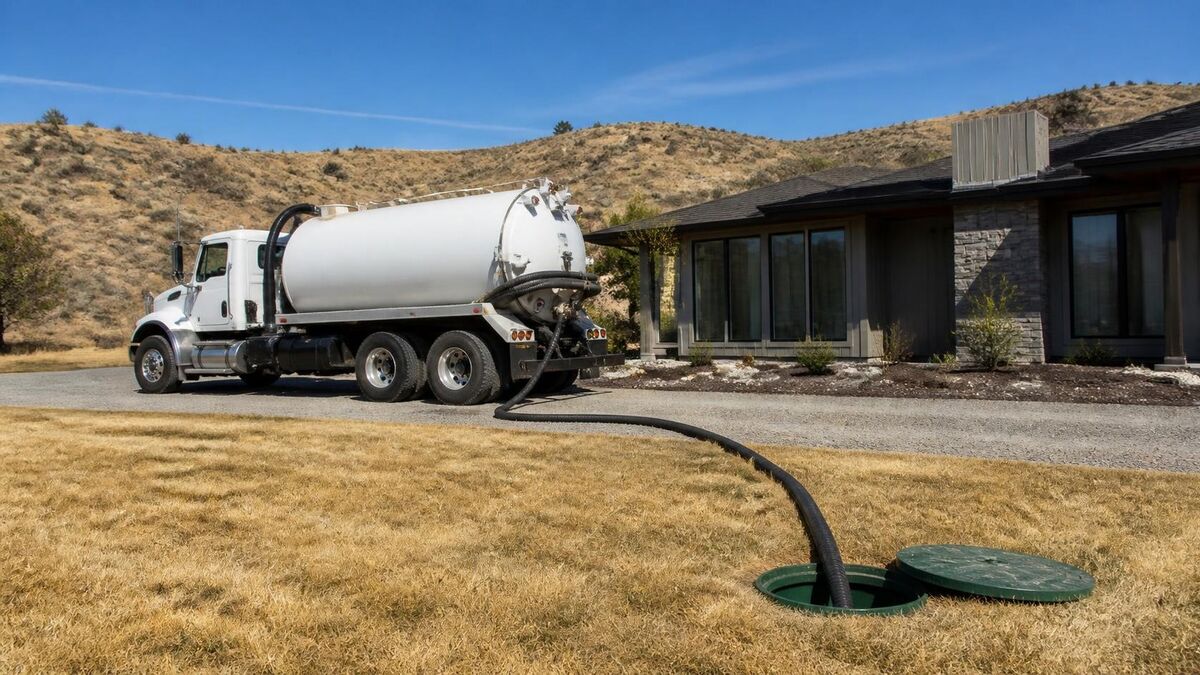
What actually happens inside a septic tank
Wastewater from toilets, showers, sinks and the washing machine flows by gravity through the building sewer into the tank. Once it slows down in that big quiet box, it separates into three layers. Fats, oils, soap residue and anything buoyant rise to form a floating mat called scum. Food particles, toilet paper and human waste that are heavier than water drop to the floor and build a sludge layer. Between the two sits a band of fairly clear liquid called effluent.
Bacteria living in the tank break down part of the organic material, which is why the sludge pile grows more slowly than the volume of waste going in. But digestion is never complete. Grit, hair, fibers from laundry and the indigestible fraction of everything else keep accumulating no matter how healthy the biology is. Only the middle effluent layer is supposed to leave the tank, passing through an outlet baffle or tee and on toward the absorption area.
Why solids have to come out before they find the outlet
When a tank goes too long between pump-outs, suspended solids and grease start riding out with the effluent. They do not cause a dramatic failure on the first day. Instead they coat the gravel or chamber floor in the soil trenches, seal the soil pores a little at a time, and shorten the life of a part of the system that is much harder to fix than a tank. Restoring a struggling absorption area is covered on the drain field repair page.
There is a plumbing side to this as well. A tank packed with sludge can slow the flow from the house, and a scum layer that reaches the inlet can plug it outright. Pumping is often the fastest way to find out whether the tank itself is the bottleneck.
What sets the pumping interval for your household
No single number fits every home, and nobody should treat a calendar date as a rule. Many households end up pumping somewhere in a range of a few years, and a gap of three to five years is where plenty of Treasure Valley families begin before a sludge reading refines it. The honest answer for your property comes from measuring how much sludge and scum have built up, then adjusting the next visit based on what the measurement showed. These are the factors that push the timeline shorter or longer:
- Household size. More people means more solids every single day. A couple in a three-bedroom house fills a tank far more slowly than a family of six in the same house.
- Tank size. A larger tank holds more sludge before it crowds the outlet. Older homes sometimes have smaller tanks than current design rules would call for, and nobody knows until the lid comes off.
- Garbage disposal use. Ground-up food adds a large load of solids that bacteria digest slowly. Homes that run a disposal heavily often need noticeably shorter intervals.
- Water use and timing. Long showers, leaking fixtures, a running toilet and back-to-back laundry loads push water through faster and stir solids toward the outlet.
Finding and exposing the lids before the truck arrives
A surprising share of pumping time goes into simply finding the tank. Many Treasure Valley systems were buried with no visible access, and decades of landscaping, sod and gravel have erased whatever marks the original installer left. A few steps usually narrow it down quickly:
- Find where the main sewer line leaves the foundation, often visible as a cleanout in the crawlspace, basement wall or just outside the house.
- Request the permit file. Central District Health for Ada County or Southwest District Health for Canyon County may have a record or a sketch showing where the system was placed.
- Walk the yard in the direction the sewer line points. The tank usually sits a short distance out, and snow often melts first over the lid in winter.
- Probe gently with a thin steel rod to feel for the concrete or plastic top and the edges of the access openings.
- Dig down to expose the lid or lids. On two-compartment tanks both openings should be uncovered so each chamber can be pumped.
Risers: moving the lids up to the surface
A riser is a short vertical section, usually plastic or concrete, that extends the tank opening up to finished grade and ends in a secure lid. Once risers are in place, every future pump-out starts with lifting a lid instead of digging a hole, and that saves time and disturbance to the yard on every visit for as long as you own the house.
In this climate a riser lid should be insulated or sit just below a thin layer of soil or mulch, because cold winters can freeze the top of the tank and the lid itself. Any surface lid needs a locking screw or a weight heavy enough that a child cannot lift it, since a fall into an open tank is a genuine danger. A cracked or crumbling riser or lid is a repair item rather than a pumping item, described on the septic repair page.
Checks worth asking for once the lids are off and the tank is empty
The truck takes out the waste, but the most useful part of the visit is the few minutes when the tank is open and empty and someone is paying attention. Ask the person doing the work to note these items and tell you what they saw:
- Sludge and scum depth before pumping. These two measurements are what set the date of your next visit, so they are worth writing down every time.
- The liquid level when the lid first comes off. A level above the bottom of the outlet suggests water is not leaving the tank as fast as it arrives.
- Backflow from the outlet side. If liquid runs back into the tank from the outlet pipe as it is being emptied, the absorption area downstream may be saturated.
- The inlet baffle or tee. It should be intact and attached, directing incoming waste downward instead of letting it shoot across the surface.
- The outlet baffle and any effluent filter. A filter should be pulled, rinsed back into the tank and reinstalled, and a clogged one often explains a slow house.
- Tank walls and seams. Cracks, roots coming through joints, or groundwater trickling in are all worth flagging for a closer look.
How a typical pumping visit runs from start to finish
A well-run visit follows a recognizable order, and knowing it helps you spot a rushed job.
- Locate and uncover the main access openings, not just the small inspection ports over the baffles.
- Measure scum and sludge, and note the starting liquid level.
- Break up the floating mat and the settled sludge so the material can be drawn out rather than left clinging to the walls and floor.
- Pump every compartment, since a tank divided by a wall needs both sides emptied.
- Look over the baffles, filter, walls and inlet once the liquid is gone.
- Close the tank securely, replace soil or set riser lids, and leave written notes on what was found.
What goes down the drain can stretch or shorten the interval
Your habits inside the house matter as much as the hardware outside. A tank is designed for human waste, toilet paper and ordinary household wastewater, and almost everything else either adds solids, floats as scum, or harms the bacteria doing the digesting.
- Keep out wipes of every kind, including ones sold as flushable, along with paper towels, dental floss, hygiene products and cat litter.
- Scrape cooking grease and fats into the trash. They harden into the scum mat and can ride out to the soil.
- Paint, solvents, automotive fluids and pesticides do not belong in any drain connected to a tank.
- Additives sold to digest sludge have weak evidence behind them and do not replace pumping.
Treasure Valley conditions that shape a pumping visit
Cold winters bring frozen ground, which can make digging for a buried lid slow and raises the value of a riser. Snow cover also hides the yard, so tracking down an unmarked tank in January can take longer than the pumping itself. Caliche and hardpan layers, common in parts of the valley, turn a simple hand-dig into a harder job when the tank sits deeper than expected.
Irrigation season adds another wrinkle. On irrigated ground, the water table can rise significantly through the growing months, and an empty tank sitting in saturated soil can be pushed upward by groundwater pressure. Mention it if your yard stays soggy all summer. Access matters too: long driveways, gates, and a tank far from where the truck can park all affect the day. Local differences across the region are described on the service areas pages.
Keep a record of every pump-out
A short paper trail turns guesswork into a schedule. After each visit, file the date, the sludge and scum measurements, the tank size and number of compartments, the condition of the baffles and filter, and anything the pumper flagged. A rough sketch with measured distances from two corners of the house to each lid will save the next person real time.
Those records also matter when you sell. What a full evaluation adds beyond a pump-out is laid out on the septic inspections page.
What drives the cost of a pump-out, and how to get one scheduled
Every property is priced by the contractor after seeing the job, so the most useful thing to understand is what moves the number. Send the details below along with the address and a couple of yard photos on the contact page, and the job can be scoped from there.
- Tank size and number of compartments, since more volume means more hauling.
- Whether the lids are already exposed, need digging, or have to be located from scratch.
- Lid depth and soil conditions, including frozen ground or caliche.
- Distance from where the truck can park to the tank, and whether extra hose is needed.
- Add-on work such as installing risers or cleaning an effluent filter.
Septic Tank Pumping: questions people ask
What signs tell me a septic tank in the Boise area is due for a pump-out?
The only reliable answer is a measurement of the sludge and scum layers, but the house often hints first. Slow drains throughout the home, gurgling in the plumbing when water runs elsewhere, sewage odors near the tank, or a backup in the lowest fixture can all point to a full tank. If you cannot remember the last pump-out, or you bought the house without records, it is reasonable to schedule one now and use those measurements to set a sensible interval going forward.
Can a septic tank be pumped in the winter in Boise?
Yes. Tanks get pumped year round across the valley, and the liquid inside rarely freezes because it stays warmer than the surrounding ground. The challenge is getting to the lid. Frozen soil and snow make digging slow, so a tank without risers can turn a routine visit into a longer job. If your lids are buried, winter is a good argument for adding risers during that visit, so later pump-outs simply mean clearing snow and lifting a lid.
Do I need to be home when my septic tank is pumped?
Not always, as long as the lids are reachable, gates are unlocked, pets are inside and the crew knows where the tank sits. Being there lets you see the open tank and ask questions on the spot. If you cannot attend, ask for written notes on sludge depth, liquid level and anything unusual, and request a photo of the open, empty tank for your records.
Can septic additives replace regular pumping?
No. The evidence that bacterial or enzyme additives meaningfully reduce sludge is weak, and none of them remove the grit, fibers and indigestible material that build up in every tank. Some products may break the scum mat loose and send solids toward the outlet, which is the opposite of what you want. A healthy tank already holds plenty of bacteria from normal household waste. Spend the money on a pump-out and a proper look at the tank instead.
How long does it take to pump a septic tank?
The pumping itself is often a fairly short part of the visit for an ordinary residential tank with exposed lids. Locating and digging up a buried tank can take much longer than the pumping, especially in frozen ground or caliche. A two-compartment tank, a long hose run from the driveway, or a heavy sludge layer that needs breaking up will also add time. Ask the contractor for a rough window when the visit is booked.
What happens if a septic tank is never pumped?
Sludge keeps climbing and the scum mat keeps thickening until there is almost no clear liquid zone left. Solids then pass out of the tank and into the soil trenches, where they clog the ground that is supposed to absorb the effluent. The usual result is slow drains, backups into the house, soggy areas or odors in the yard, and eventually an absorption area that has to be rebuilt or replaced, which costs far more than years of routine pump-outs.
Talk through your site
Start with the address, what you want done, and a few photographs of the area, including anywhere water sits after a heavy rain.
Related work
Septic Inspections
Inspections for home sales and refinances: what a real inspection covers and where it stops.
Septic Repair
Baffles, lids, risers, pipes, pumps and alarms: failures that can be fixed without a whole new system.
Drain Field Repair
Soggy ground, slow drains and odors from a struggling field, and the options from rest to replacement.
New Septic Systems
New and replacement systems: site evaluation, permits and designs that suit Treasure Valley soil and groundwater.
Across the metro
Kuna
Fast-growing south-valley acreage and subdivisions, many on septic, on caliche and shallow hardpan.
Nampa
Canyon County homes on irrigated ground with seasonal high groundwater and older rural systems.
Eagle
Foothill and river-bottom lots, larger homes and systems sized for big households.
Star
Newer west-valley subdivisions and acreage where septic is the norm and irrigation season matters.