Home › Services
Drain field repair in Boise when the ground stops taking water
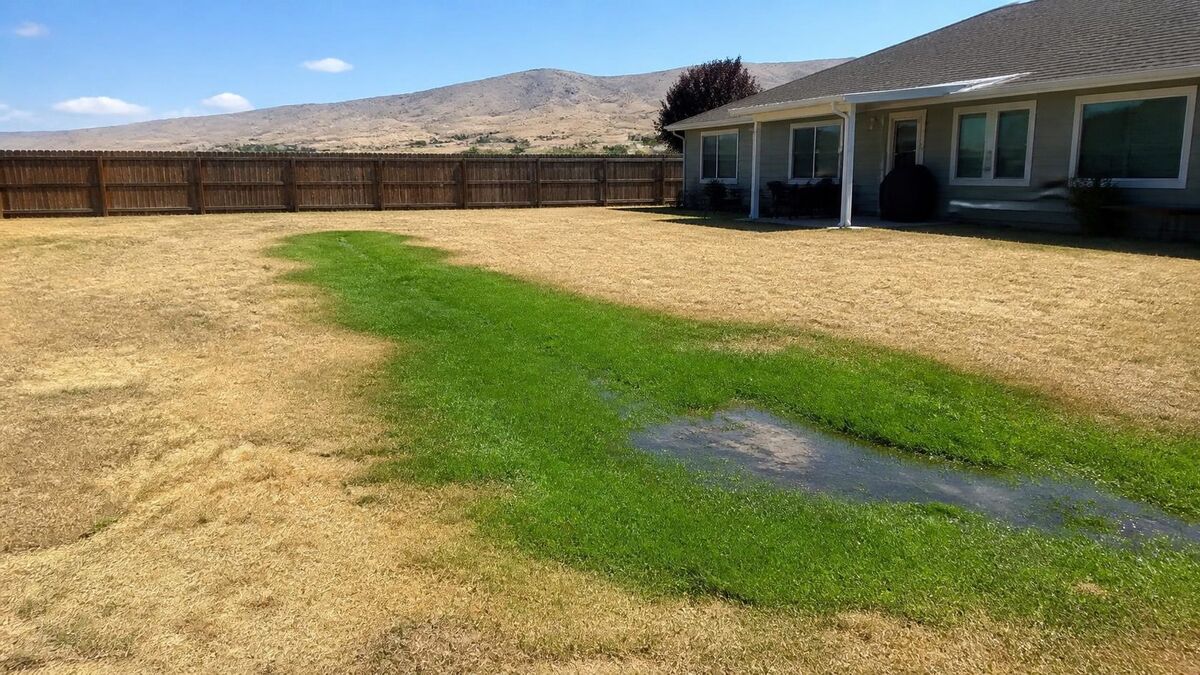
Homeowners tend to think about the tank, yet the real cleanup of wastewater happens out in the drain field. It is the stretch of trenches or beds where effluent soaks into soil and gets cleaned on its way to groundwater. When that soil stops accepting water, the signs show up in the yard first and the house second: a soft patch that never dries, a strip of grass greener than the rest, drains that slow after a wet week. Around Boise and the Treasure Valley, caliche, river sand and irrigation-season groundwater all shape how a field ages. This page covers how fields work, why they fail, what can honestly be done short of replacement, and how to protect one. To have a field looked at, start on the contact page.
What a drain field actually does with effluent
Liquid leaving a septic tank is far from clean. It still carries dissolved organic matter, bacteria, viruses and nutrients. The field spreads that liquid through perforated pipe or chambers into a layer of gravel or open space, and from there it trickles down into native soil. The real treatment happens in the first few feet of unsaturated ground, where air reaches the soil pores, bacteria break down organic material, and fine particles filter and hold pathogens.
That is why the separation between the trench bottom and groundwater, hardpan or bedrock matters so much. Soil that stays wet loses its air, and saturated soil does a poor job of treatment. The health district looks hard at this separation when it reviews a design, because it is the difference between a field that cleans water and one that just moves it.
The biomat: a working layer that can turn into a wall
Within months of a new field going into service, a thin black layer forms on the floor and sides of each trench, right where effluent touches native soil. Called the biomat, it is a mix of bacteria, their byproducts and fine organic solids. In moderation it helps: it slows the flow just enough that the soil beneath stays unsaturated and treats well.
Problems begin once that layer builds up quicker than the bacteria in the surrounding soil can break it down. On valley lots the usual triggers are heavy water loads, solids slipping past the outlet, and grease or laundry lint reaching the trenches. A thick biomat seals the trench, effluent ponds above it, and the liquid finds the path of least resistance, which is usually upward to the surface or back toward the house.
Signs a drain field is struggling
A failing field rarely quits overnight. It gives warnings for weeks or months, and catching them early widens the options considerably.
- Ground over the trenches that stays soft or spongy days after irrigation stops.
- Grass over the lines that is noticeably greener, thicker or faster-growing than the rest of the lawn.
- Standing water or dark, wet staining in the field area.
- A sewage odor outdoors that is strongest over the field rather than the tank.
- Drains that slow across the whole house, especially after heavy water use or a wet spell.
- A tank that refills above its outlet soon after pumping, a sign the field is not taking water away.
- Backups that line up with the irrigation schedule or spring snowmelt.
What usually kills a field
Fields fail for a short list of reasons, and more than one is often at work. Identifying which ones apply decides whether repair is worth attempting.
- Hydraulic overload: more people in the house, long showers, a leaking toilet flapper, or a water softener recharging into the system.
- Solids carryover from a tank that went too long between pump-outs or lost its outlet baffle.
- Grease, lint from washing machines, and wipes that pass through the tank and coat the trench.
- Compaction from vehicles, parked trailers or construction equipment driven over the lines.
- Roots from trees and shrubs planted too close, growing into pipes and gravel.
- Seasonal high groundwater that saturates the soil under the trenches during irrigation season.
- Surface water from roof downspouts, driveways or sprinklers directed onto the field.
How Treasure Valley ground changes the picture
Soils across the valley are far from uniform. Along the Boise River, sandy and gravelly soils drain fast, which keeps fields from ponding but gives effluent less time in the treatment zone. That speed is part of why nitrate reaching groundwater is a long-running concern in parts of Ada and Canyon County. Elsewhere, especially on the south and west sides, a caliche or hardpan layer can sit a few feet down and act like a floor, so water spreads sideways and surfaces even though the topsoil seems fine.
Irrigated ground adds a seasonal swing. A field that performs all winter can struggle in July when flood or sprinkler irrigation lifts the water table under it. Cold winters bring their own issue: a field with little snow cover, or with traffic packing the frost deeper, can freeze and stop accepting flow until spring. Area-specific notes on these patterns are on the Nampa and Eagle pages.
Rule out the cheaper causes before blaming the field
Plenty of systems that look like field failures turn out to be a part upstream. A clogged effluent filter, a tipped distribution box sending all the flow to one trench, a failed pump or float, or a crushed pipe between tank and field can each produce wet spots and slow drains. Those are repair jobs, explained on the septic repair page, and they cost far less than trench work.
A careful diagnosis checks the tank level, the outlet and filter, the distribution box and the condition of each lateral before anyone recommends new trenches. Probing the field, digging a small inspection hole beside a trench, or running a camera down a lateral shows whether effluent is ponding and how deep.
Resting a field and alternating between two
A biomat breaks down when it is starved of effluent and given air. That is the logic behind resting a field. Some systems are built with two fields and a diversion valve, so flow can switch from one to the other on a schedule the designer sets. The resting field dries out, soil microbes consume much of the biomat, and capacity partly returns.
Where only one field exists, a contractor may suggest adding a second, smaller field and a valve rather than replacing the original. That lets the old field rest instead of being abandoned. Resting will not help a field damaged by roots, crushed by vehicles or sitting in groundwater, and it requires that the household actually cut its water use while the switch takes effect.
Jetting, aeration and additives: what they can and cannot do
Several treatments are sold as field rejuvenation, and homeowners deserve a straight read on each one. None of them fix a field that is undersized, saturated by groundwater, or packed solid by traffic.
- Line jetting: high-pressure water clears slime and roots from inside perforated pipe. It helps when pipes themselves are clogged, but it does nothing for a biomat sealed against the soil.
- Soil fracturing or aeration: air is forced into the ground beside the trenches to open cracks and bring oxygen in. Results vary widely by soil, and in tight or hardpan ground the gains can be short-lived.
- Aerobic treatment ahead of the field: adding an aerobic unit cleans effluent further before it reaches soil and can let a biomat thin out. It is a real option, though it adds power, maintenance and a permit.
- Additives: little solid evidence shows bacteria or enzyme treatments revive a clogged field, and they neither stand in for a pump-out nor remove the cause.
Replacing or expanding a drain field
When a field is beyond rest or treatment, the answer is new absorption area. Sometimes that means trenches in fresh soil beside the old ones; sometimes it means a full replacement in a different spot on the lot. In both cases the work is regulated. Central District Health in Ada County and Southwest District Health in Canyon County review soil conditions, approve the design and inspect before backfill, working under Idaho Department of Environmental Quality rules. Each district sets the requirements for the address.
A replacement design may look different from what was there before. Poor soil, shallow hardpan or high groundwater can call for pressure distribution, a mound or an advanced treatment unit rather than a simple gravity trench. The site evaluation and system options are covered on the new septic systems page.
How a drain field job usually unfolds
- Diagnosis: tank level, outlet, filter, distribution box and laterals checked to confirm the field is the problem.
- A decision on resting, treatment, partial replacement or full replacement, explained in writing.
- For new trenches, a site and soil evaluation and a permit application through the health district.
- 811 called and utilities marked before excavation begins.
- Excavation, placement of gravel or chambers and pipe, and connection to the distribution box or pump line.
- Health district inspection with the work still open, before any backfill.
- Backfill, grading so surface water runs away, and seeding with shallow-rooted grass.
What drives the cost of drain field work
Field work spans a huge range, from leveling a box to building a new pressurized system, so pricing only means something after a site visit. A complete proposal names the cause, the fix, the permit path and the restoration plan. These are the factors that move it.
- Which fix applies: resting and a valve, line jetting, added trenches, or a full replacement.
- Soil and depth to hardpan or groundwater, which dictate the design type.
- Available space on the lot for new absorption area outside existing setbacks.
- Access for an excavator and the distance from the tank to the new field.
- Whether a pump, pressure distribution or treatment unit becomes part of the design.
- Site evaluation, design and permit requirements set by the health district.
- Landscape, sprinkler and driveway restoration once the trenches are closed.
Protecting the field you have
Most of what keeps a field alive is simple. Keep the tank pumped on a schedule set by a sludge measurement, which the septic tank pumping page covers, and keep everything else off the field.
- No driving, parking, sheds, hot tubs or play structures over the trenches.
- Shallow-rooted grass only; keep trees and big shrubs well away from the lines.
- Point downspouts and sprinkler heads away from the field area.
- Spread laundry across the week instead of a single marathon day.
- Fix running toilets and dripping faucets promptly, since they add water around the clock.
- Keep grease, wipes and food scraps out of the drains.
Drain Field Repair: questions people ask
How do I know if my drain field is failing?
Watch the yard and the tank together. A field in trouble usually shows soft or wet ground over the trenches, grass that grows faster there than anywhere else, and an outdoor odor that is strongest over the lines. Inside, drains slow throughout the house, often worst after laundry or a wet stretch. A tank that refills above its outlet soon after pumping is a strong clue the field is not moving water away. A contractor can probe the trenches to confirm it.
Can a failed drain field be fixed without replacing it?
Sometimes. If the cause is a tipped distribution box, a clogged filter, a failed pump or a crushed lateral, fixing that part may bring the field back. If the trouble is a thick biomat in otherwise sound soil, resting the field, adding a second field to alternate with, or adding aerobic treatment upstream can restore some capacity. A field damaged by roots, compaction or groundwater usually needs new absorption area under a health district permit.
Why is the grass greener over my leach field?
Faint stripes of greener grass over the trench lines can be normal, because a working field releases some moisture and nutrients into the root zone. Grass that is dramatically greener, thicker or taller across the whole field, especially in the dry part of summer, suggests effluent is rising closer to the surface than it should. If that comes with soft ground or odor, have the field checked before the problem spreads to the house.
How long does a septic drain field last?
There is no fixed lifespan. Field life depends on soil, design, how much water the household uses, how faithfully the tank is pumped, and whether the field is protected from traffic and roots. Fields in good soil with steady maintenance can work for decades, while a field fed solids from a neglected tank can fail far sooner. Groundwater rising under the trenches each irrigation season also shortens life on some valley lots.
Does irrigation affect my septic drain field?
It can, in two ways. Sprinklers or flood irrigation that soak the field area directly add water the soil must absorb on top of household flow. Across the wider valley, irrigation season also raises the water table, which can saturate the soil beneath trenches from below. Systems that work fine in winter and struggle in mid-summer often fit this pattern. Keep sprinklers off the field, and ask a contractor whether groundwater is reaching the trench depth.
Can I build a patio or plant trees over my drain field?
Keep both off it. A patio, deck or driveway compacts the soil, blocks air from reaching the treatment zone, and makes future repairs much harder. Trees and large shrubs send roots into perforated pipe and gravel looking for water. Shallow-rooted grass is the best cover. Before any landscaping project, have the tank, distribution box and trench lines located and marked so the work stays clear of them.
Is it safe to walk on a soggy drain field?
Avoid it. A soggy field may have untreated wastewater at or just below the surface, and that carries bacteria and viruses that can make people and animals sick. Keep children and pets off the area, wash hands and boots after any contact, and do not mow the wet section until it dries. Walking or driving on saturated ground also compacts the soil and can push the field closer to failure.
Talk through your site
Start with the address, what you want done, and a few photographs of the area, including anywhere water sits after a heavy rain.
Related work
Septic Tank Pumping
Pumping on a sensible schedule, what should be checked while the lid is open, and how often is too often.
Septic Inspections
Inspections for home sales and refinances: what a real inspection covers and where it stops.
Septic Repair
Baffles, lids, risers, pipes, pumps and alarms: failures that can be fixed without a whole new system.
New Septic Systems
New and replacement systems: site evaluation, permits and designs that suit Treasure Valley soil and groundwater.
Across the metro
Kuna
Fast-growing south-valley acreage and subdivisions, many on septic, on caliche and shallow hardpan.
Nampa
Canyon County homes on irrigated ground with seasonal high groundwater and older rural systems.
Eagle
Foothill and river-bottom lots, larger homes and systems sized for big households.
Star
Newer west-valley subdivisions and acreage where septic is the norm and irrigation season matters.